The Floor That Was Promised
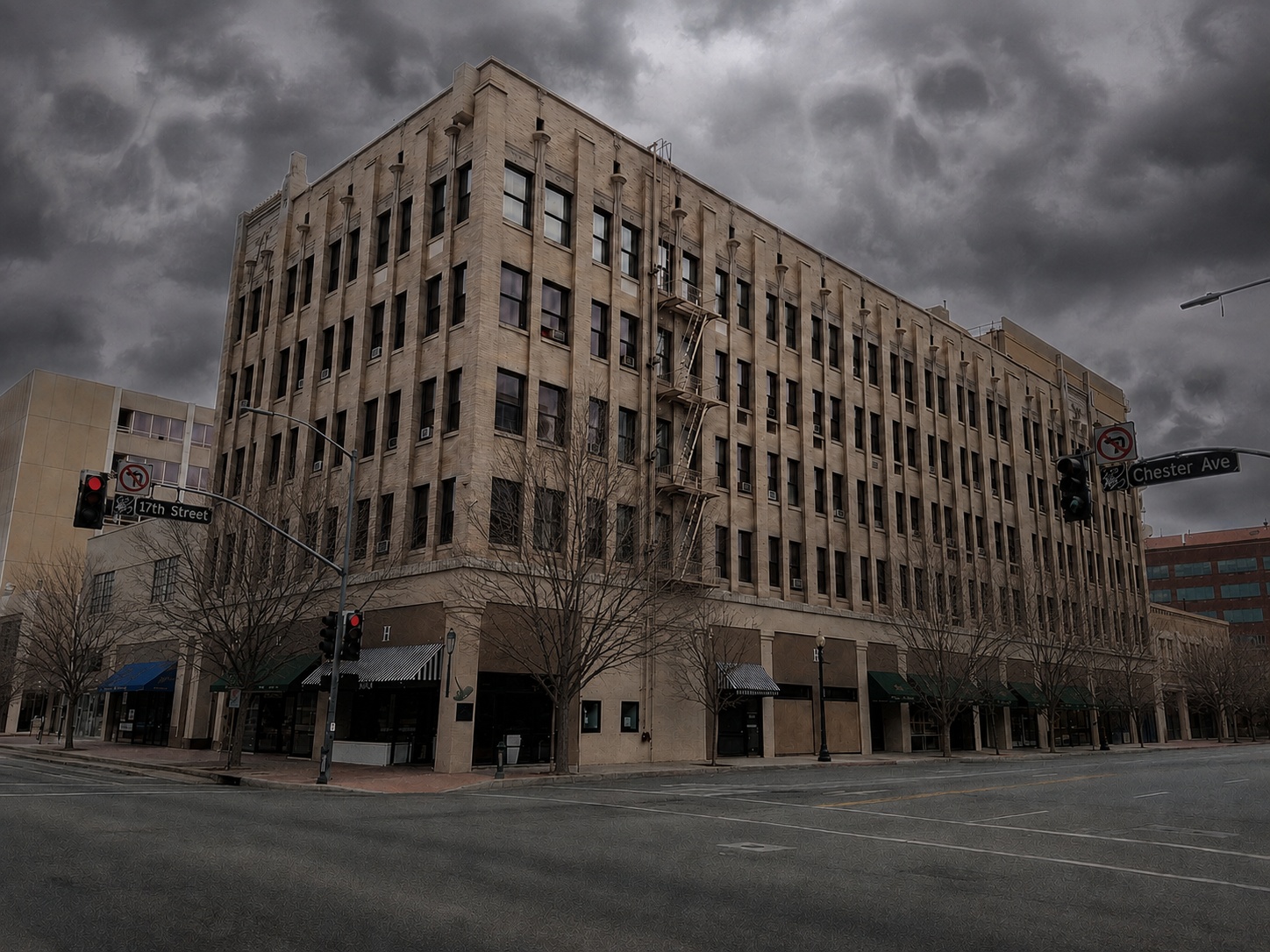
The Haberfelde Building has five floors.
You can confirm it from the street. You can count the rows of windows, examine the directory in the lobby, or climb the stairs until they end at the roof. There is no hidden penthouse, forgotten ballroom, or enclosed room above the fifth floor.
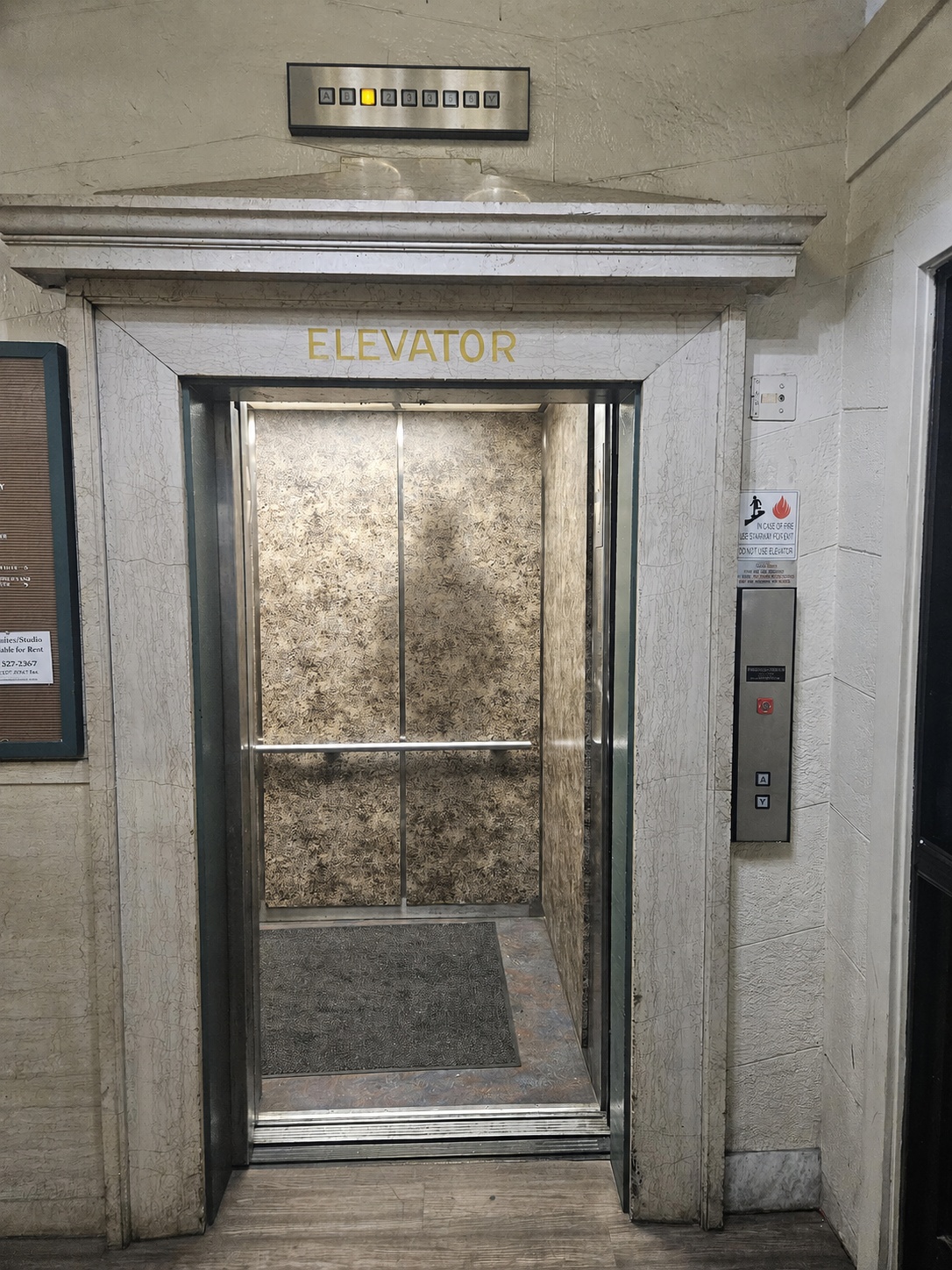
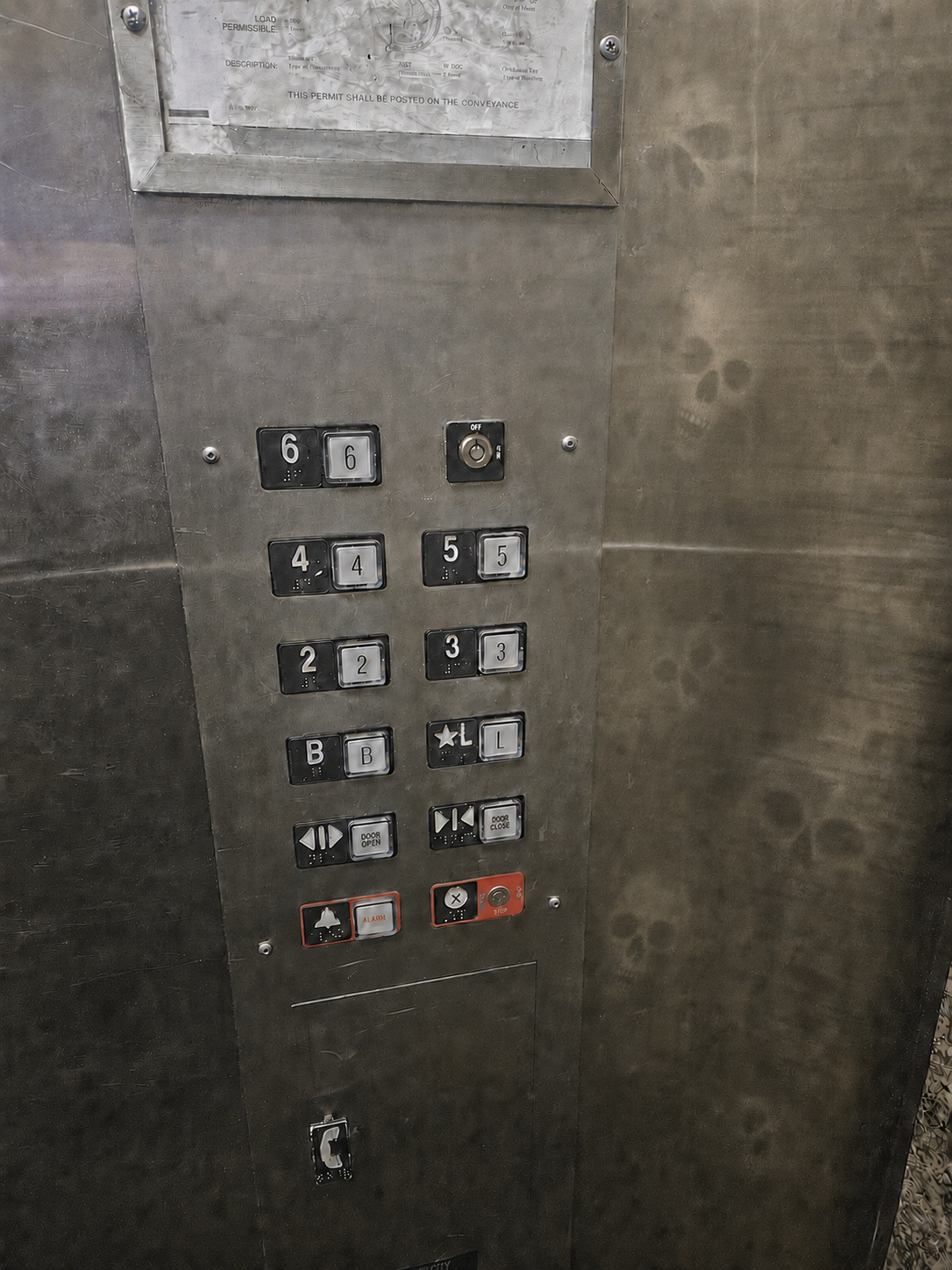
Nevertheless, the building’s elevator has a button marked “6.”
Most visitors assume it is a harmless mistake—an unused button left behind when a standard elevator panel was installed. People who have worked in the building for many years know better.
The sixth button is not a mistake.
It is a promise.
The Replacement Panel
In 1994, an elevator technician named Nathan Bell was hired to replace the aging control panel inside the car. Nathan had worked on elevators throughout Kern County, and nothing about the job initially concerned him.
The building manager gave him one unusual instruction.
“You can replace every part of the panel,” the manager said, “but leave the number six where it is.”
Nathan laughed.
“There isn’t a sixth floor.”
“I know.”
“Then the button isn’t connected to anything.”
The manager looked into the empty elevator.
“Leave it anyway.”
Nathan assumed the man was sentimental about the building’s peculiarities. He waited until the offices closed and began removing the old panel.
The buttons for the first five floors were connected to a bundle of color-coded wires. The alarm, door controls, and emergency telephone were also wired exactly as expected.
The sixth-floor button was different.
A single black wire ran from the back of the button into the elevator wall. It was not part of the regular control system. Nathan followed it as far as he could, but instead of joining the main cable, it disappeared through a small hole drilled into the roof of the car.
He climbed through the maintenance hatch and searched the top of the elevator. The wire was not there.
There was no opening through which it could have passed.
Nathan returned to the car and tugged on it. The wire remained firmly attached to something above him.
He cut it.
The instant his pliers closed around the wire, a bell rang somewhere inside the elevator shaft.
It did not sound like a modern electronic chime. It was the clear metallic ring of an old elevator call bell.
Once.
Then twice.
Then three times.
Nathan leaned out and looked up the dark shaft. There was nothing above the fifth floor except cables, machinery, and the underside of the roof.
He returned to the panel, removed the sixth-floor button, and placed it in his toolbox.
The ringing stopped.
The Call From Above
Shortly after midnight, Nathan finished installing the new panel. It contained buttons for floors one through five. Where the number six had been, there was now an unbroken sheet of brushed metal.
He tested each floor and returned to the lobby.
As he packed his tools, the elevator doors closed behind him.
The car began to rise.
Nathan had not pressed a button.
He watched the indicator above the doors advance from 1 to 2, then 3, 4, and 5.
The elevator did not stop.
The cables groaned as the car continued upward into a space that did not exist.
The indicator went dark.
A moment later, the number 6 appeared behind the glass.
It was not part of the new display. Nathan had personally inspected every number in it. There was no 6.
Yet the figure glowed above him in a dim amber light.
The elevator stopped.
The doors opened.
Beyond them was not the fifth-floor hallway or the roof machinery room. Nathan saw the interior of an unfinished apartment.
Bare wooden beams crossed the ceiling. Strips of faded wallpaper hung from plaster walls. Dust covered the floor, except for a narrow trail of small footprints leading away from the elevator.
At the far end of the room stood a little girl.
She wore a white dress with a blue ribbon around the waist. Her dark hair hung in curls beside her face. She appeared to be no more than eight years old.
“Is Papa with you?” she asked.
Nathan stepped backward.
The elevator doors closed before he could answer.
The indicator changed from 6 to 5, and the car began to descend. Seconds later, the doors reopened in the lobby.
Nathan ran to the stairwell and climbed to the fifth floor. From there, he followed the stairs to the roof.
There was no apartment.
There was no additional floor.
There was only the nighttime sky above downtown Bakersfield.
The Original Plans
The building manager was waiting when Nathan returned to the lobby.
He did not seem surprised by Nathan’s story.
“You removed the button,” he said.
Nathan opened his toolbox.
The brass button was gone.
In its place lay a faded photograph of a little girl in a white dress. Beside her stood a man wearing the uniform of an early elevator operator.
On the back, someone had written:
Clara and her father, 1919. Waiting for our home on the sixth floor.
The manager explained what he had learned from a former custodian.
When the building was being planned, one of the men responsible for its original elevator had been promised an apartment on a proposed sixth floor. He was a widower raising a young daughter named Clara. He brought her to the construction site often and showed her where their rooms would be.
Clara chose the wallpaper, described the view she wanted from her bedroom, and told everyone that she would live above the entire city.
Her father even gave her the brass elevator button intended for the sixth floor.
“When this is installed,” he told her, “the elevator will bring you home.”
The additional floor was later eliminated from the plans. The building would stop at five stories, and the promised apartment would never be built.
Clara never learned that.
She became seriously ill before construction was completed. During her final days, she repeatedly asked her father when they would move into their new home. Unable to tell her the truth, he assured her that it was almost ready.
Clara died with the brass button clutched in her hand.
Her father disappeared soon afterward.
Workers found his coat and hat inside the elevator, but no one ever found him. The only unusual thing they discovered was a newly installed button marked “6.”
No one admitted installing it.
For decades afterward, employees occasionally reported seeing a uniformed elevator operator late at night. He would ask whether they wished to visit the sixth floor.
Those who declined were returned safely to the lobby.
Those who accepted were not always seen again.
Put It Back
“What happens now?” Nathan asked.
The building manager looked toward the elevator.
“You put the button back.”
“I told you—it disappeared.”
“Then she has it.”
The elevator bell rang.
The doors opened.
The little girl stood inside the car, holding the brass button in her palm.
“Papa said the elevator would bring me home,” she said.
Behind her was the impossible sixth floor. The unfinished apartment had changed. A fire burned in a stone fireplace. Lamps glowed behind lace shades. Framed photographs covered the walls.
At the far end of the room, the elevator operator stood beside an open door.
He looked exactly as he did in the photograph.
“Come see your room,” Clara said.
Nathan felt an almost irresistible urge to step inside. The apartment looked warm and peaceful. Somewhere beyond the doorway, a woman was singing a lullaby.
Then Nathan noticed the photographs on the wall.
They showed men and women from many different decades. Some wore business suits. Others wore janitorial uniforms or carried toolboxes. In every photograph, the person stood inside the same sixth-floor apartment.
The newest frame was empty.
A small brass plate beneath it bore Nathan’s name.
He reached forward, took the button from Clara’s hand, and stepped back into the lobby.
Her expression changed.
“You promised,” she whispered.
The elevator lights went out.
Something struck the inside of the doors with enough force to shake the walls. Nathan heard a child crying, followed by the angry voice of a man demanding that he return what belonged to them.
Nathan pressed the brass button into the empty place on the new panel.
It locked into position without screws or tools.
The doors closed.
The crying stopped.
After several seconds, the elevator indicator returned to 1.
When the doors opened again, the car was empty.
The Sixth Button
Nathan never returned to the Haberfelde Building.
Over the years, other technicians replaced the elevator’s wiring, controls, and interior fixtures. Each was warned to leave the sixth button alone.
A few ignored the warning.
Whenever the button was removed, it returned before sunrise.
Some people believe the elevator carries Clara to the home her father promised her. Others believe the impossible apartment is merely a trap created by a child who waited so long for a sixth floor that the building finally made one for her.
Employees working late have reported hearing a little girl singing above the ceiling of the fifth floor. A few have seen small fingerprints appear on the elevator doors from the inside.
Occasionally, the sixth-floor button illuminates by itself.
If that happens, do not press it.
Do not answer if a child asks whether her father is with you.
Most importantly, do not step out when the doors open.
The Haberfelde Building still has only five floors.
But the elevator remembers the floor that was promised.
This page is sponsored by Bakersfield Escape.
Visit our sponsor for escape-room adventures inside the historic Haberfelde Building.